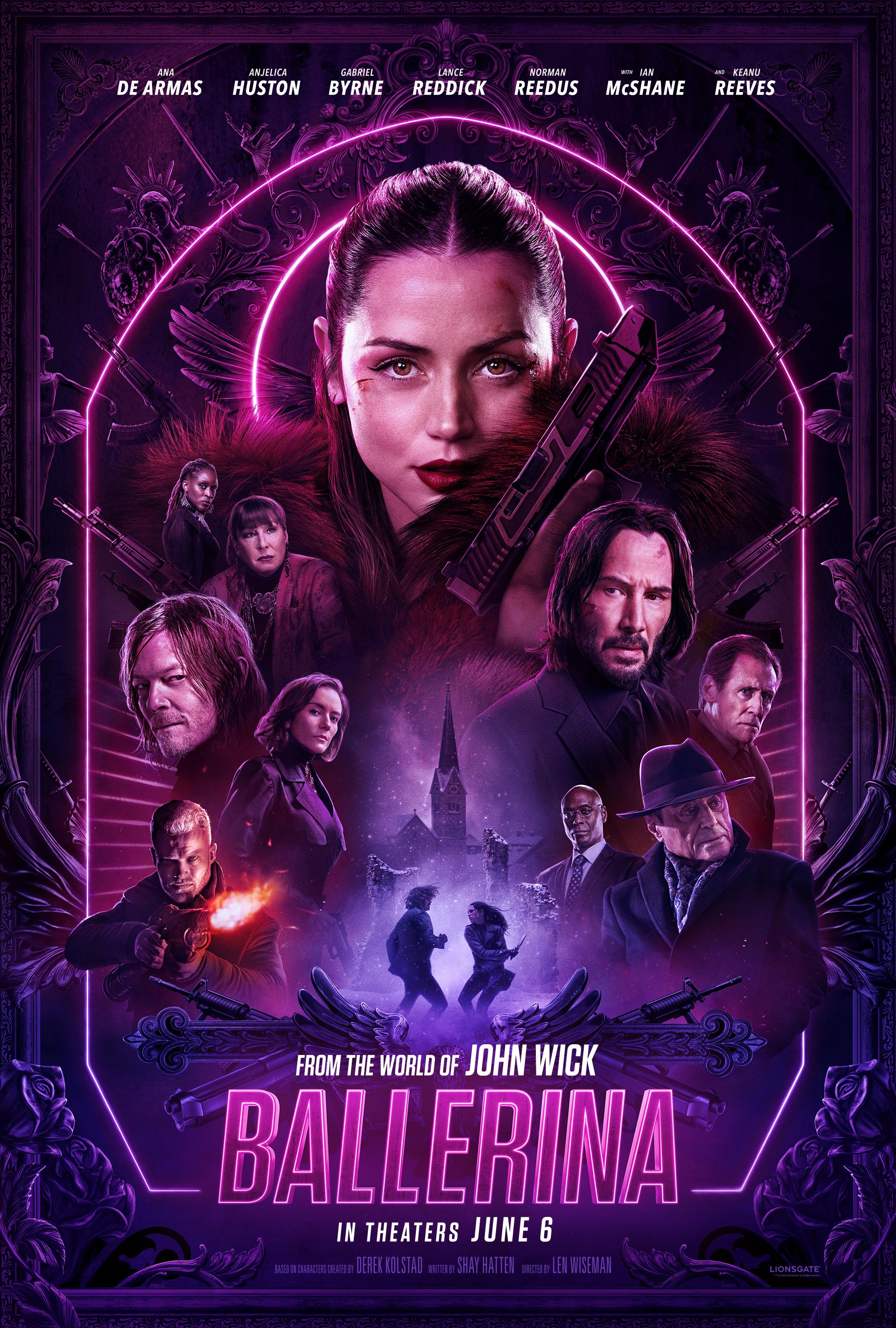
There’s something quietly audacious about Ballerina. A spin-off from the John Wick universe was always going to carry weight, but instead of going louder or bloodier, it goes colder, more introspective. This isn’t Wick on pointe shoes. It’s a character piece disguised as an action film. And for the most part, it works.
When Ballerina was announced as a spin-off from the John Wick universe, I was genuinely intrigued. The franchise has redefined modern action with balletic brutality and world-building that’s practically mythological. So a film focused on the elusive Ruska Roma ballerinas teased in John Wick: Chapter 3? Count me in.
Ballerina stars Ana de Armas as Rooney, a trained assassin with unfinished business. The setting slots in neatly between John Wick Chapters 3 and 4, giving it just enough timeline elbow room to feel connected but standalone.
Ana de Armas is magnetic. You believe every punch she throws, but also every tear she hides. Her performance elevates a script that occasionally feels thin. Credit to director Len Wiseman (of Underworld fame) for resisting the urge to make this a non-stop shoot-’em-up. There’s genuine mood and tone here, neon-drenched sadness even, but it comes at the cost of urgency.
Keanu Reeves makes a respectful cameo, as do Lance Reddick and Ian McShane, grounding the film in familiar Continental territory without overshadowing the new lead. Ian McShane is reliably brilliant. Every word he says feels carved in stone. Gabriel Byrne brings a haunted dignity as the patriarch of the assassin order. His scenes have weight, his silences even more. Norman Reedus enters with the swagger of a man who’s seen too much and trusts too little. He’s not just window dressing – he brings edge.
Here’s the hook: the action is still gorgeously choreographed-slick, stylish, and with that unmistakable Wick-ian flavour-but the pacing stumbles. Where the main franchise was driven by grief, revenge, and a Spartan efficiency, Ballerina leans more into emotion and atmosphere.
Notably, the film expands the Wick lore with restraint, which I respect. Unlike The Continental TV series (which I haven’t yet watched), Ballerina doesn’t over-explain the mythology. It knows its audience. It trusts them.
Verdict:
Ballerina is a worthy, if uneven, addition to the Wick-verse. Not quite a standing ovation, but far from a misstep. It pirouettes through grief, vengeance, and grace with style, but occasionally forgets that the music matters as much as the moves.


Leave a Reply