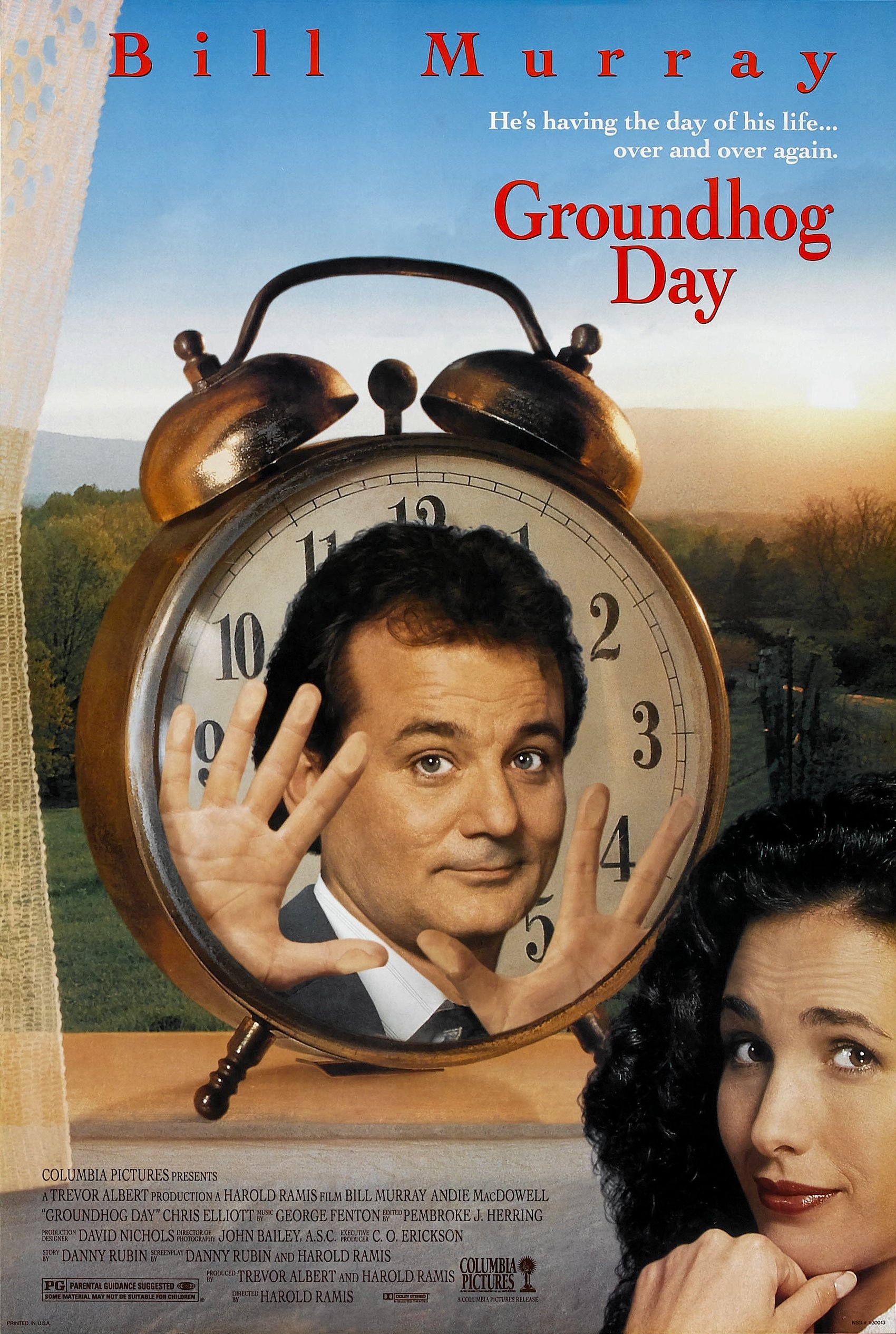
Rewatching Groundhog Day thirty years later reveals both its enduring strengths and the weight of cultural overpraising.
Bill Murray remains magnificent, delivering his career-best performance as Phil Connors transforms from narcissistic weatherman to enlightened soul. The time-loop concept still works brilliantly, and Harold Ramis directs with admirable restraint.
However, what felt revolutionary in 1993 now seems more familiar. The philosophical elements that academics have dissected for decades occasionally feel overstated upon reexamination. Andie MacDowell’s Rita, while charming, represents an idealized “perfect woman” that feels dated. Some of Phil’s romantic pursuit tactics, played for laughs then, land differently now.
The film’s greatest achievement remains its structural elegance… Danny Rubin’s concept allows for genuine character development within repeated scenarios. Murray’s journey from cynicism to compassion still resonates, even if the destination feels more predictable than it once did.
Groundhog Day succeeds as crafted entertainment that accidentally became a cultural touchstone. It’s a solid 7/10 that benefits from lowered expectations formed by decades of “greatest comedy ever” hyperbole. The film works best when viewed as accomplished Hollywood filmmaking rather than the philosophical masterpiece it’s been elevated to become.
Sometimes the passage of time reveals that good movies aren’t necessarily great ones.


Leave a Reply